


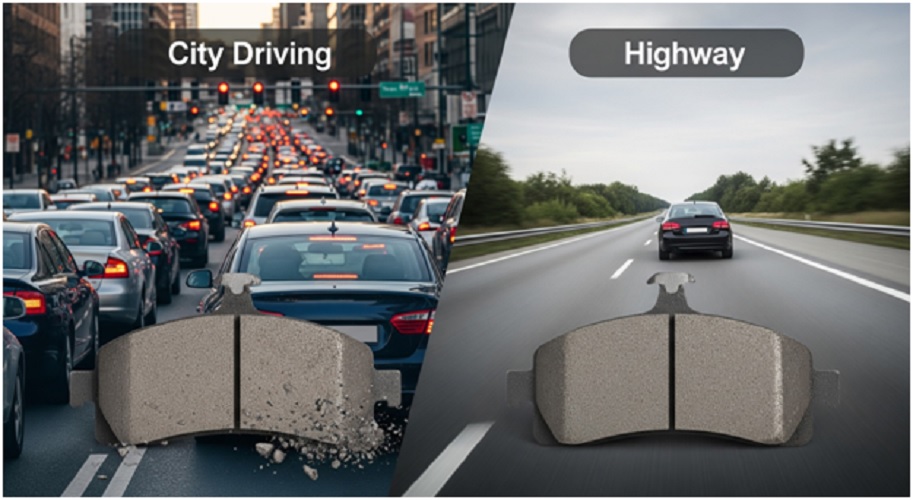
Imagine two identical cars leaving the factory on the same day. One is sold to a daily commuter in a bustling downtown core, the other to a sales representative who spends their days on the open highway. After two years and 30,000 miles, the city car is already on its second set of brake pads. The highway car? Its original brakes still have more than half their life left.
What explains this dramatic difference? It’s not the car or the parts—it’s the environment. The battle between city and highway driving represents two vastly different worlds for your vehicle’s braking system. Understanding why one is so much more demanding than the other is key to predicting your own maintenance needs and managing your budget.
Key Takeaways
- City driving wears out brake pads much faster due to constant stop-and-go traffic, frequent braking, and continuous heat cycles.
- Brakes in city environments rarely cool down fully, causing not just pad wear but also heat-related degradation in calipers, grease, and rubber seals.
- Highway driving lets your brakes “rest”—they are used infrequently, so pads can last up to 80,000 miles or more in some cases.
- Panic stops on highways generate high heat but happen rarely, so overall wear on brake pads remains much lower than in city driving.
- Maintenance needs depend on your driving environment: City drivers should plan for more frequent brake inspections and replacements, while highway drivers can extend intervals but must check for problems caused by inactivity.
The City Environment: A Trial by Fire and Friction
City driving is, without question, the ultimate torture test for brake pads. The wear and tear doesn’t come from high speeds, but from two other critical factors: frequency and heat.
The Core Problem: Constant Frequency The primary reason city driving is so harsh is the sheer number of times you use the brake pedal. Think about a typical five-mile trip across town. You’ll brake for dozens of stop signs, traffic lights, crosswalks, and to avoid other cars in stop-and-go traffic. You might use your brakes 50, 100, or even more times.
Now, compare that to a 20-mile stretch on the highway, where you might not touch the brake pedal even once. Every single time your brake pads clamp onto the rotor, a tiny amount of friction material is worn away. While each individual application in the city is small, the cumulative effect of this high-frequency usage is what rapidly erodes your brake pads.
The Unrelenting Heat Cycle Every time you brake, you convert motion into heat. In a city environment, your brakes are constantly engaged in a punishing cycle of heating up and partially cooling down, but they rarely get a chance to fully dissipate the heat before the next stoplight.
This sustained thermal stress does more than just wear down the pad material. It can cook the high-temperature grease lubricating the caliper pins, leading to seized parts. It can degrade the rubber seals and, over time, even lower the boiling point of your brake fluid. This constant thermal cycling accelerates the aging process of the entire brake assembly, not just the pads.
The Highway Environment: A Life of Rest and Coasting
For a brake system, highway driving is like a long, relaxing vacation compared to the hard labor of the city.
The Core Advantage: Low Frequency The defining characteristic of highway driving is the inactivity of the braking system. For long stretches, the pads are disengaged, cool, and under no stress. They are only called upon for specific, infrequent events like exiting a ramp or slowing for a rare traffic jam. This lack of use is the single biggest contributor to their incredible longevity. Many dedicated highway drivers can easily get 80,000 miles or more from a single set of pads.
Efficient Energy Management On the highway, you often slow down simply by taking your foot off the accelerator and coasting. The vehicle’s kinetic energy is gradually overcome by air resistance and the rolling resistance of the tires. This is the most efficient way to slow a car, as it doesn’t “spend” any of your brake pad’s life.
The Highway Caveats Life on the highway isn’t entirely without its challenges. Long periods of inactivity can sometimes lead to caliper pins seizing from lack of movement, especially in wet or salty climates. Furthermore, while infrequent, a panic stop from 70 mph generates far more heat than a low-speed city stop. However, because these events are rare, the overall wear remains exceptionally low.
What This Means for Your Maintenance Schedule
Understanding your primary driving environment is crucial for planning your vehicle maintenance.
- If you are a city driver, accept that brake replacement is a frequent and predictable cost of ownership. You should have your brakes inspected often and invest in durable, high-quality pads designed to withstand constant use.
- If you are a highway driver, you can expect a very long life from your pads, but don’t neglect inspections. An annual check-up is still vital to ensure components haven’t seized from inactivity and that age-related issues, like brittle rubber hoses, are caught early.
Ultimately, the debate comes down to frequency over force. The constant, repetitive workload of city driving is far more destructive to your brake pad lifespan than the occasional hard stop on the highway. To see how your environment translates into a more specific timeline, you can review this guide on how often you should change your brake pads.
Why do brake pads wear out faster in the city than on the highway?
Because city driving involves frequent braking at stop signs, lights, and in traffic, causing constant wear and heat buildup. This repeated use erodes the brake pad material much faster than the infrequent braking typical on highways.
Can highway drivers neglect brake checks since their pads last longer?
No. While pads last longer, lack of use can cause caliper pins to seize, especially in wet or salty conditions, and other components may degrade with age, so annual inspections are still important.
Is it better to invest in special brake pads for city driving?
Yes. Durable, high-quality brake pads designed for frequent use can help city drivers prolong brake life and reduce the likelihood of heat-related failures. However, regular inspections remain essential regardless of pad quality.