


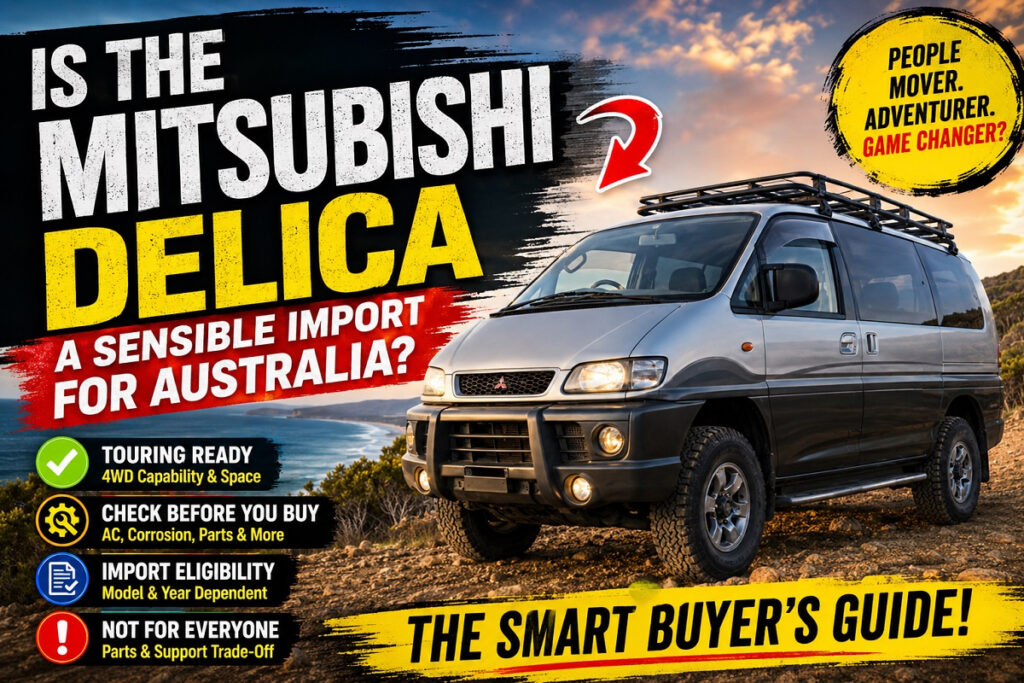
Is The Mitsubishi Delica A Sensible Import For Australia?
Yes, for the right use. The Mitsubishi Delica suits Australian buyers who need a distinctive people mover with touring or dirt-road potential, but it demands careful checks on import eligibility, air conditioning, corrosion and parts support. It is a poor choice if you want ordinary local servicing and quick replacement parts.
Why Mitsubishi Delica Australia Buyers Keep Looking
The Mitsubishi Delica remains attractive in Australia because it combines the shape of a people mover with the attitude of a 4WD van. That combination matters here. A family using a vehicle only around Melbourne has different needs from one travelling several hundred kilometres between regional towns, carrying camping gear and using dirt access roads at the far end.
The appeal is also about availability. Japanese-market people movers, vans and unusual variants are recurring reasons Australian buyers look overseas, especially when the local new-car range does not offer the same vehicle. Most Delica shoppers already know the name before they start comparing listings. The harder question is not whether the van looks interesting. It is whether its compromises fit the work you will give it.
Mitsubishi Delica Australia Road Use: City Or Touring?
The best use for a Mitsubishi Delica in Australia is mixed travel, where a spacious cabin and access beyond sealed roads matter more than easy urban ownership. Sealed roads in and between the capitals are generally good, so a Delica can work as a family vehicle in Sydney, Brisbane or Adelaide. Its extra capability becomes more relevant once the route includes unsealed stretches.
That does not make every Delica a sensible touring vehicle. A buyer who spends nearly every day in central Sydney or Melbourne may find the specialised layout and Japan-only support harder to justify than a mainstream van. A buyer near Cairns, Darwin or Townsville needs to think about tropical wet-season conditions. Someone in inland Australia needs to take heat and dust seriously. The right answer depends on where the van actually travels, not the image attached to it.
What To Check Before Choosing A Delica
A Delica inspection should start with condition, not accessories. Look closely for corrosion if the vehicle will live near the coast, then check the air conditioning, seals, underbody and signs of dust entering the cabin or mechanical areas. Air conditioning is not optional across Australia, and a touring van that cannot keep its occupants comfortable will quickly become an expensive ornament.
The auction record deserves the same attention as the photographs. Buyers should match the model code, year, condition description and equipment against the actual unit being considered. Do not treat an auction grade or odometer reading as a description of every Delica. They belong to one vehicle. Ask for clarification when a photograph hides the underside, cabin or engine bay. A clean-looking exterior does not answer those questions.
- Confirm the model code and year for the individual vehicle.
- Check air conditioning operation and visible corrosion.
- Inspect the underside for dirt, damage and repairs.
- Ask how Japan-only parts will be sourced before purchase.
Parts, Servicing And The Ownership Trade-Off
The main ownership downside is support. Parts and service access are strong for mainstream Japanese marques in Australia, but Japan-only models can be slower and weaker in this area. That difference matters more in a working van or touring vehicle than in a weekend project. A vehicle that sits while one unusual component is found has a very different value from one repaired locally.
Before buying, speak to a workshop that is willing to assess the vehicle rather than assuming any Japanese specialist will want the job. Keep the model code and parts references organised. It is also sensible to identify a plan for routine servicing, air conditioning work and suspension repairs before the vehicle arrives. The Delica’s unusual appeal is real, but so is the time involved when the repair is not familiar to the local workshop.

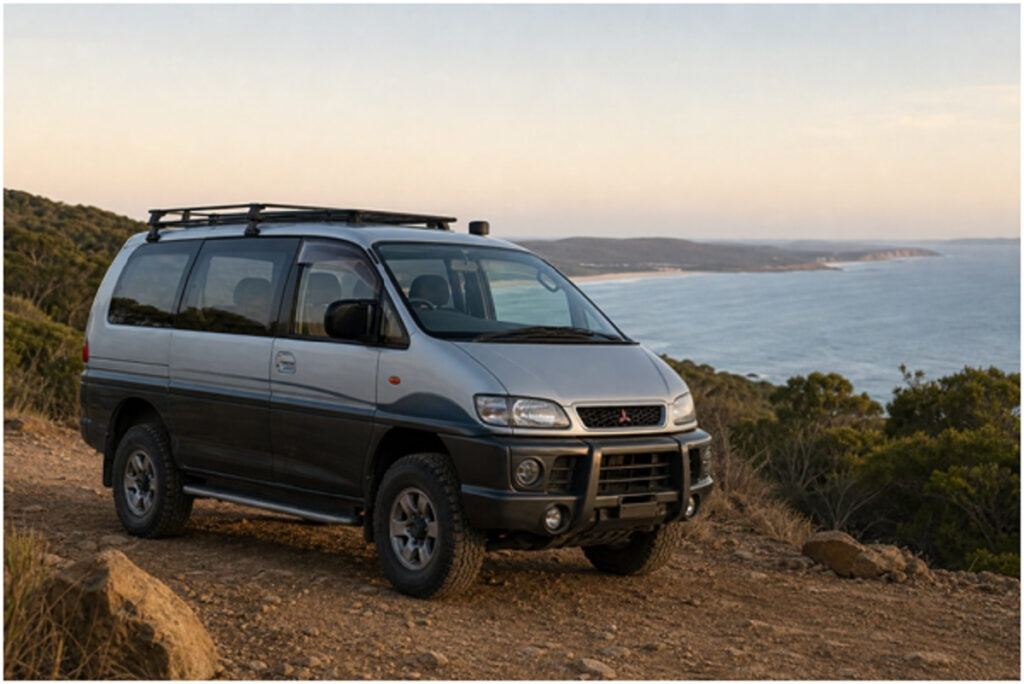
Import Eligibility Must Be Checked For Each Delica
Import eligibility is model and year dependent in Australia, so a buyer must check the specific Delica before committing. Eligibility windows can change, and an assumption based on a similar vehicle is not enough. Treat the model’s own import page as the starting point, then confirm the current position through the relevant Commonwealth process.
The buying process also needs patience. Review the individual listing, inspection material and available documentation before selecting a vehicle. The import cars from Japan listings show the type of Japanese stock being offered at a given time, but stock changes weekly and a Delica may not be available when you look. For a wider view of the exporter and its process, Carbarn Australia gives the relevant market context without replacing your own eligibility check.
Who Should Buy One And Who Should Walk Away
A Delica makes the most sense for an Australian buyer who values a Japanese-market 4WD van enough to accept slower parts support and extra research. That could be a family second vehicle, a camping project or a people mover used on regional trips. The case is stronger when the vehicle’s unusual format solves a real problem rather than simply looking different in the driveway.
Walk away if you need predictable local servicing, immediate parts availability or a vehicle that will spend its life on short urban errands. A mainstream van may be less distinctive and easier to own. That is not a criticism of the Delica. It is the basic trade-off. Confirm eligibility, inspect the actual unit and ask a workshop about support before you bid.
Frequently Asked Questions
Was The Mitsubishi Delica Sold New In Australia?
The Delica is treated by Australian buyers as a Japanese-market import rather than a normal local-delivery choice. Availability and eligibility depend on the particular model and year, so do not rely on a general statement. Check the specific vehicle’s current import position before paying a deposit or bidding.
Is A Delica Suitable For Australian Dirt Roads?
It can suit dirt-road touring when the individual vehicle is in good condition and the route matches its equipment. Australian roads vary sharply between capital-city streets and long unsealed regional stretches. Check the underside, air conditioning, corrosion and mechanical condition before assuming a Delica is ready for remote travel.
Are Delica Parts Easy To Find In Australia?
Parts support is usually weaker and slower for Japan-only models than for mainstream Japanese vehicles. A Delica buyer should identify a willing workshop and a parts-sourcing plan before purchase. That preparation matters most for a daily family vehicle, working van or touring vehicle that cannot sit idle.
Does A Delica Need Strong Air Conditioning In Australia?
Yes. Air conditioning should be treated as a buying requirement because Australia includes tropical wet seasons, inland heat and long journeys between towns. Test the system on the actual vehicle and inspect related components. A van that cannot cool its cabin properly is a poor fit for family or touring use.
Should I Buy A Delica For City Driving?
Only if the Delica’s space and unusual format are worth its ownership compromises. Capital-city roads are generally sealed and good, so a buyer who never leaves the city may not use the vehicle’s touring potential. Compare the need for local convenience against the specialist support a Japan-only model may require.